2.How does removing Profitability Index (P/I) from the scorecard align with APA’s ongoing commitment to capital discipline?
Removing P/I from the annual incentive scorecard does not represent a shift away from capital discipline. P/I remains a core tool used by management and the Board to evaluate and prioritize capital investments and is regularly discussed in Board meetings as part of capital allocation oversight. The economic principles reflected in P/I continue to inform capital decision-making and are inherently embedded in the design and calibration of the APA performance framework.
Rather than relying on P/I as a single, composite incentive measure, the refined corporate performance scorecard reflects the same underlying economic principles through a set of discrete financial and operational metrics that are more transparent and directly linked to execution. These measures provide clearer accountability and line of sight for participants, while collectively reinforcing disciplined capital deployment, cost management, and operational performance.
This approach preserves the capital efficiency discipline embedded in P/I while better aligning employee incentives with APA’s balanced, returns-driven capital strategy and the Board’s capital allocation framework. As a result, employees remain focused on the key drivers of value creation, and capital discipline continues to be reinforced consistently across governance, management decision-making, and incentive outcomes.
3.What evidence has the MD&C Committee seen that the redesigned corporate performance scorecard is achieving its intended outcomes?
The MD&C Committee has seen encouraging evidence that the revised corporate performance scorecard is driving the intended outcomes across the portfolio. The disaggregation of cost metrics has improved accountability and created greater visibility into performance management at both the corporate and asset levels.
Operationally, APA maintained stable, efficient production in Egypt, and continued to execute safely and reliably across U.S. assets with fewer active rigs and lower capital spending. This reflects the balance between cost discipline and production reliability that the revised framework was designed to achieve.
Financially, APA reduced net debt* by more than $1.4 billion and reached a $350 million cost savings run-rate goal by year-end, signaling tangible progress in managing costs and optimizing capital deployment.
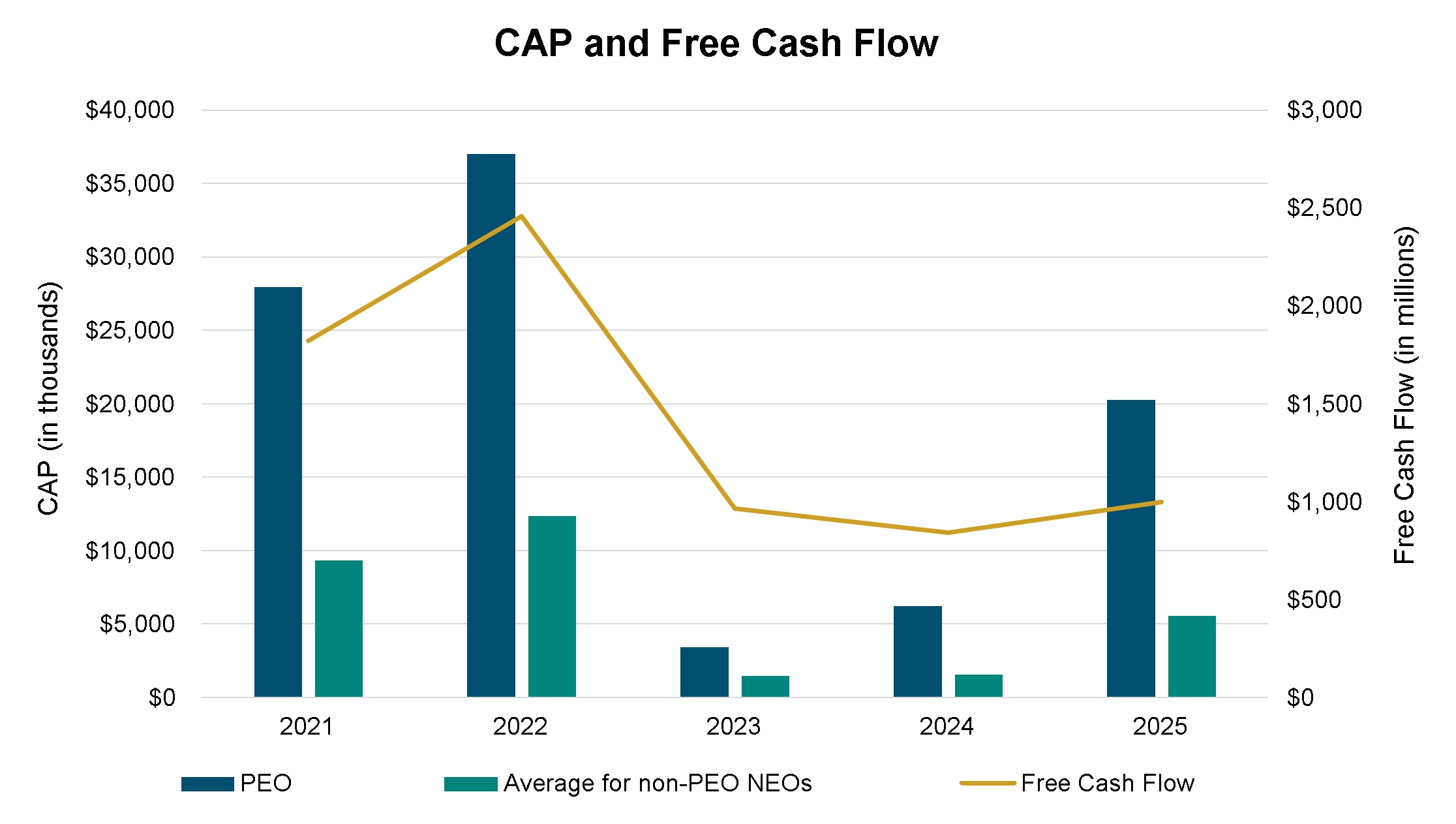
The MD&C Committee views these results as confirmation that the scorecard’s design is strengthening alignment between leadership priorities, operational execution, and free cash flow generation. We will continue to monitor quantitative performance and shareholder feedback to ensure the framework remains transparent, balanced, and supportive of long-term shareholder value creation.
* Refer to the Non-GAAP Financial Measures section of this proxy statement for a reconciliation of this non-GAAP financial measure.
4.How have changes to the leadership team helped to drive performance?
Over the past two years, APA has undergone a thoughtful evolution in its leadership structure to better align capabilities with the Company’s strategic and operational priorities. These changes brought together leaders with deep experience in capital discipline, operational execution, and financial stewardship—areas that directly reflect the focus of our redesigned corporate performance scorecard. The Company’s sharpened focus under this leadership framework supports clear accountability across functions and provides a transparent framework for assessing performance and driving results. We have an extremely capable workforce at APA, and through streamlined and better-aligned leadership we are releasing those capabilities to enable rapid change and improved performance. In short, as the Company strengthened and clarified operational responsibilities, the MD&C Committee ensured that our incentive design evolved in parallel, reinforcing alignment between leadership priorities, business execution, and long-term shareholder value creation.
5.Can you describe how the Board views alignment of CEO pay and Company performance in recent years?
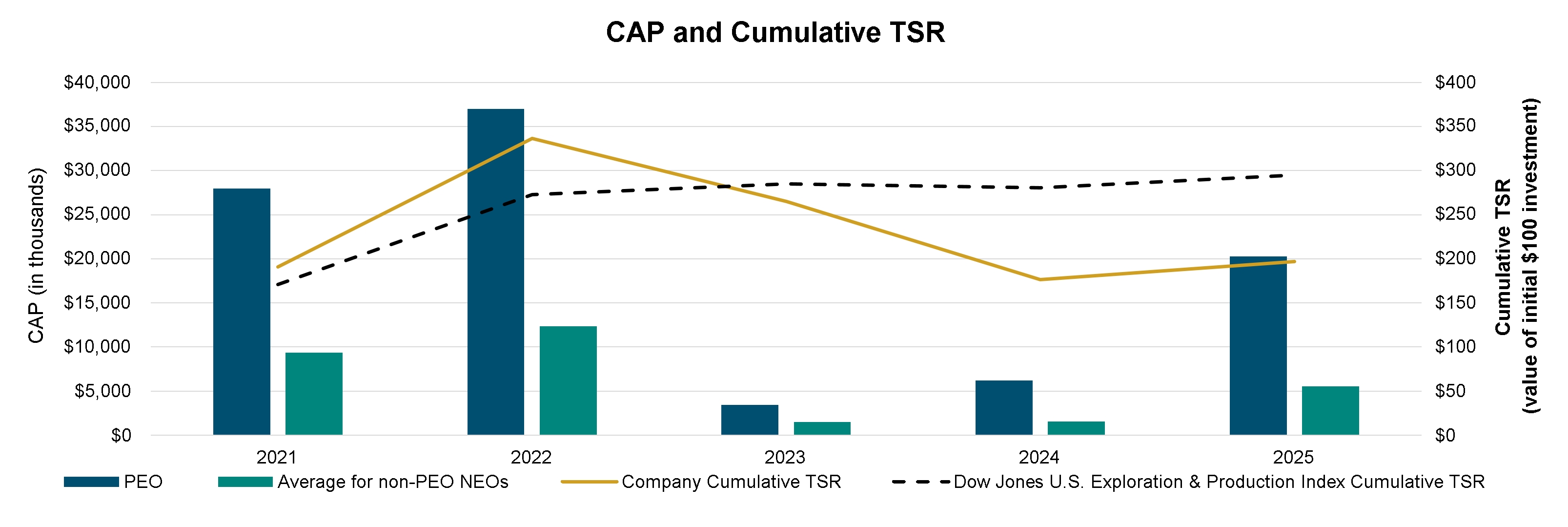
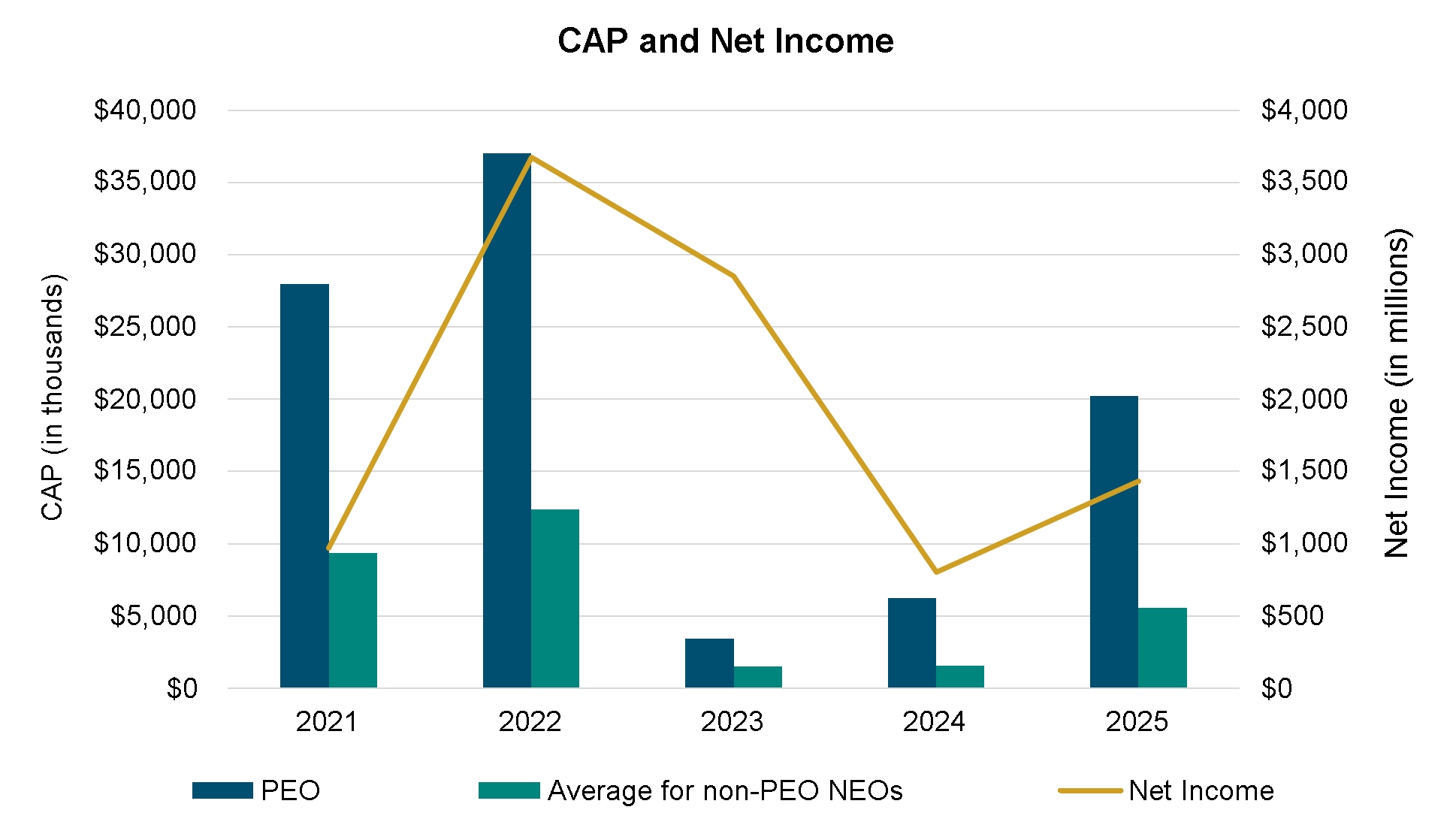
Performance-based pay is a core principle of our compensation plan, and we believe the performance measures used in our incentive plans are the right ones to position APA for long-term success and create sustainable shareholder value, and we are beginning to see results in shareholder value based on our stock price performance in 2025. Given the cyclical nature and highly volatile landscape of the E&P sector, our executive compensation program is designed to keep leadership focused on executing key initiatives and driving sustainable growth and returns, positioning the Company to capitalize on opportunities and deliver value as market conditions improve. This approach balances rewarding business achievements with maintaining alignment to long-term shareholder outcomes, even during challenging periods. For example, in 2025 the Company’s share price rose nearly 6%, with the Company ranking second among thirteen oil peers in share price performance despite oil prices declining 20% over the same period.
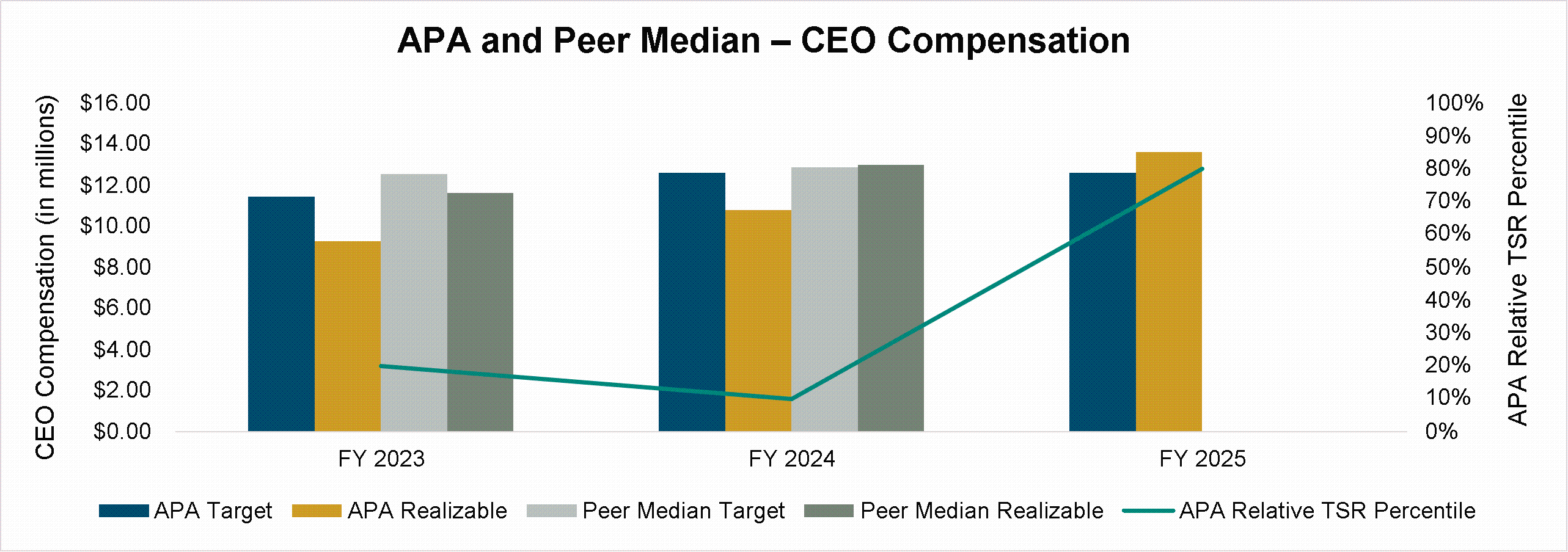
We target total compensation opportunity at the median of our compensation peer group, with realizable pay determined by performance—executives can earn above or below their target opportunities based on actual performance results. For example, results linked to annual incentive awards have exceeded target performance levels, reflecting meaningful progress in key business areas, while the portion of long-term performance awards linked to relative TSR have generally yielded below target payouts, which is consistent with our philosophy of aligning executive compensation with shareholder returns.
As shown in the chart below, our CEO’s target total compensation opportunities (APA Target) in 2023 and 2024 were below the Peer Median Target, and his realizable pay (APA Realizable) fell below both the APA Target and Peer Median Target, demonstrating that our CEO’s realizable pay history is aligned with stock performance. In 2025, the CEO’s APA Target was again set in alignment with the Peer Median Target. Improved performance during the year, reflected in the increase in APA’s relative TSR ranking, resulted in APA